
Water softeners · Diamond Bar, CA
Water Softener Installation in Diamond Bar, CA: Do You Need One, and What Size?
Scale on fixtures and heaters is a sign of hard water, and Diamond Bar's supply varies by source. A softener is one answer, and filtration is a different one. This page helps you decide what you actually need before anything is sized.
Start with your own water
Walnut Valley Water District imports all of its water. Its 2025 report lists about 60 percent from the Weymouth plant at an average hardness of 234 mg/L, about 39 percent from the Miramar plant at 97 mg/L, and a small share of groundwater at 215 mg/L. The report does not say which blend reaches which street.
The U.S. Geological Survey classifies 61 to 120 mg/L as moderately hard, 121 to 180 as hard, and above 180 as very hard. By that scale, the Weymouth average is very hard and the Miramar average is moderately hard. To convert, divide mg/L by 17.1 to get grains per gallon, which is the unit softeners use.
- Call the district at (909) 595-7554 or check its latest water quality report.
- Ask which source serves your address, and what hardness to expect.
- Give that number to the installer, who can then size a unit from it.
Softener or filter: which problem do you have?
A softener removes the minerals that cause scale. A filter removes other things, such as taste or odor. They are not the same product, so be clear about the problem before you buy either.
| What you notice | Usually points to |
|---|---|
| White crust on faucets, spots on glass, scale in the kettle | Hardness, so a softener |
| Chlorine taste or smell | A filter |
| Slow hot water recovery, scale inside the heater | Hardness, plus maintenance on the heater |
The district's report lists a chlorine residual averaging 2.11 ppm, which is a disinfectant, not a hardness problem. Taste concerns are a filter question. If you want a whole-house filter, ask the installer what contaminant it targets and how often the cartridge changes.
Seeing scale on fixtures? Call and tell us what you notice.
Call (833) 571-0120What the install involves
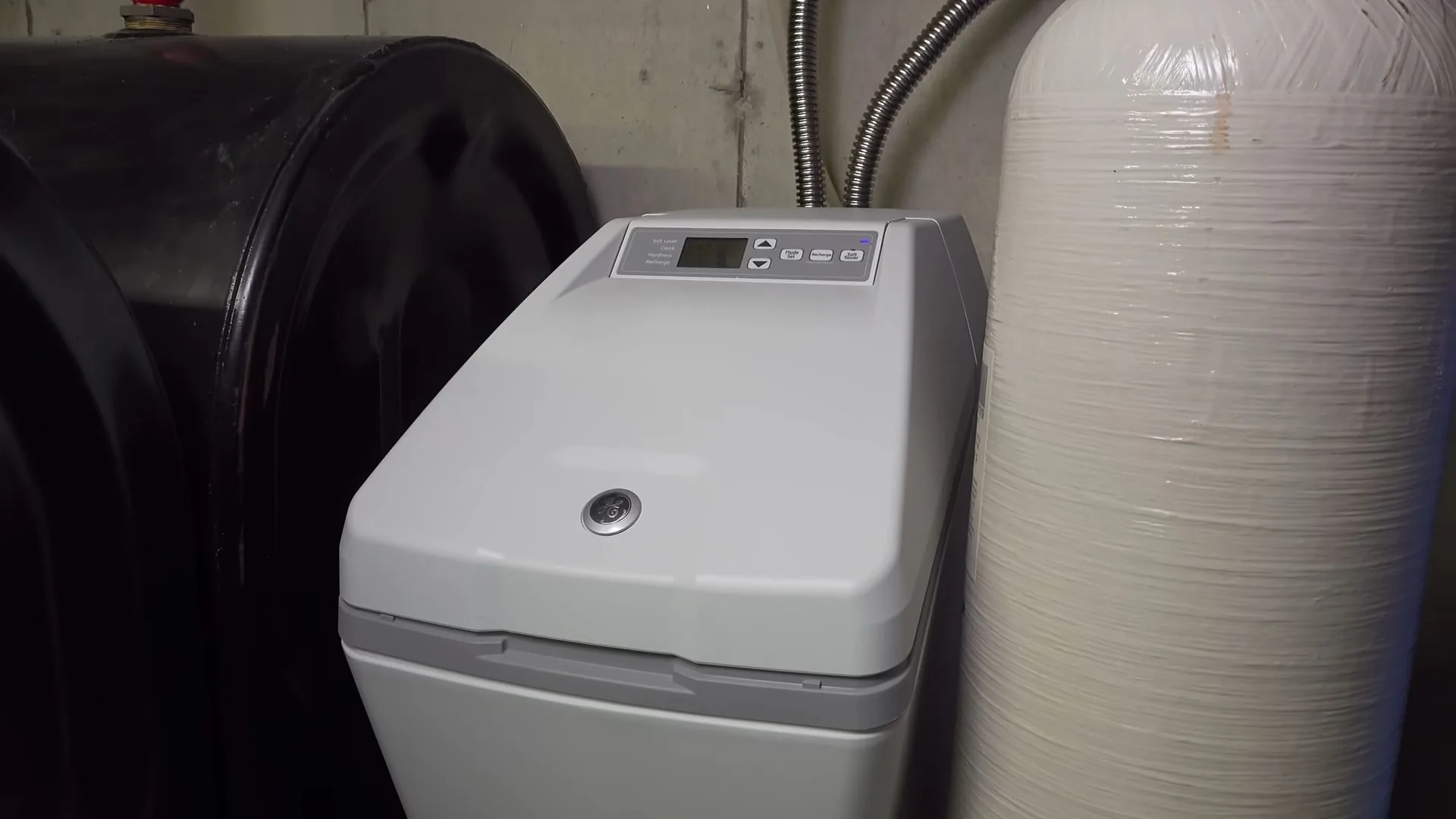
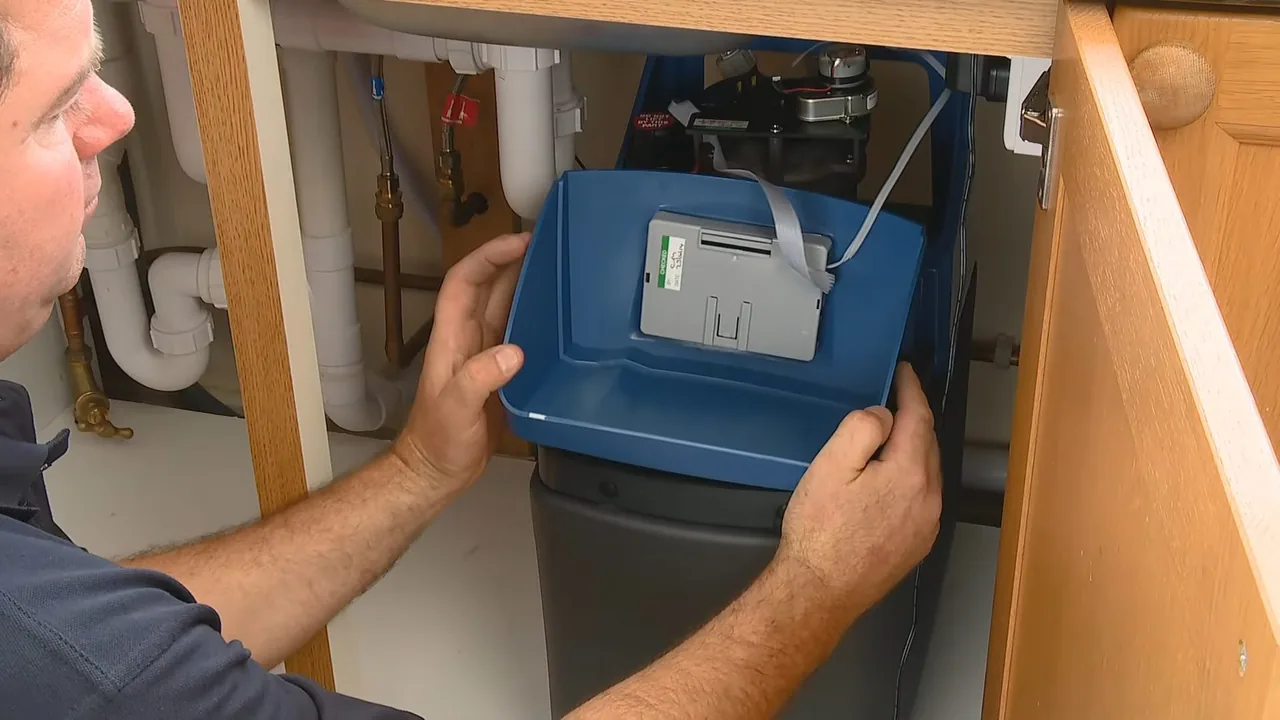
A softener sits on the main water line, usually near the point where water enters the house, with a brine tank for salt and a drain connection for the rinse water. Ask where the plumber plans to place it and where the drain will go.
- Ask for a bypass valve so the unit can be isolated during service.
- Ask where the rinse water drains and whether it is plumbed to the sewer.
- Ask about an outdoor hose bib: many people keep outside taps off the softened line.
- Ask how much salt the unit uses and how often it is refilled.
Softener rinse-water rules to ask your sewer agency about
Some California communities restrict certain softeners that discharge salty rinse water to the sewer, and state law allows local agencies to do so. We did not find a rule for Diamond Bar, so ask the installer and the sewer agency whether anything limits your choice before you buy.
The City of Diamond Bar says plumbing permits are required for all plumbing work, including water service and related fixtures and appliances. Ask whether your install needs one. Building and Safety is at (909) 839-7020.
Softened water and your water heater
Hard water leaves scale on heating surfaces, which is why softeners and water heaters come up together. If you are replacing a tank, see replacing a tank water heater and plan the softener at the same visit. For a tankless unit, scale matters even more, as covered on the on-demand heaters page.
Sizing and regeneration questions to ask before buying
Softeners vary in capacity, salt use and controls. A good quote names the model and ties the size to your measured hardness and the number of people in the house.
- What capacity is quoted, and what hardness and household size was it sized for?
- How often will the unit regenerate, and how much water does that use?
- Is the control valve metered, so it regenerates on use and not on a clock?
- What does the warranty cover on the tank, the valve and the labor?
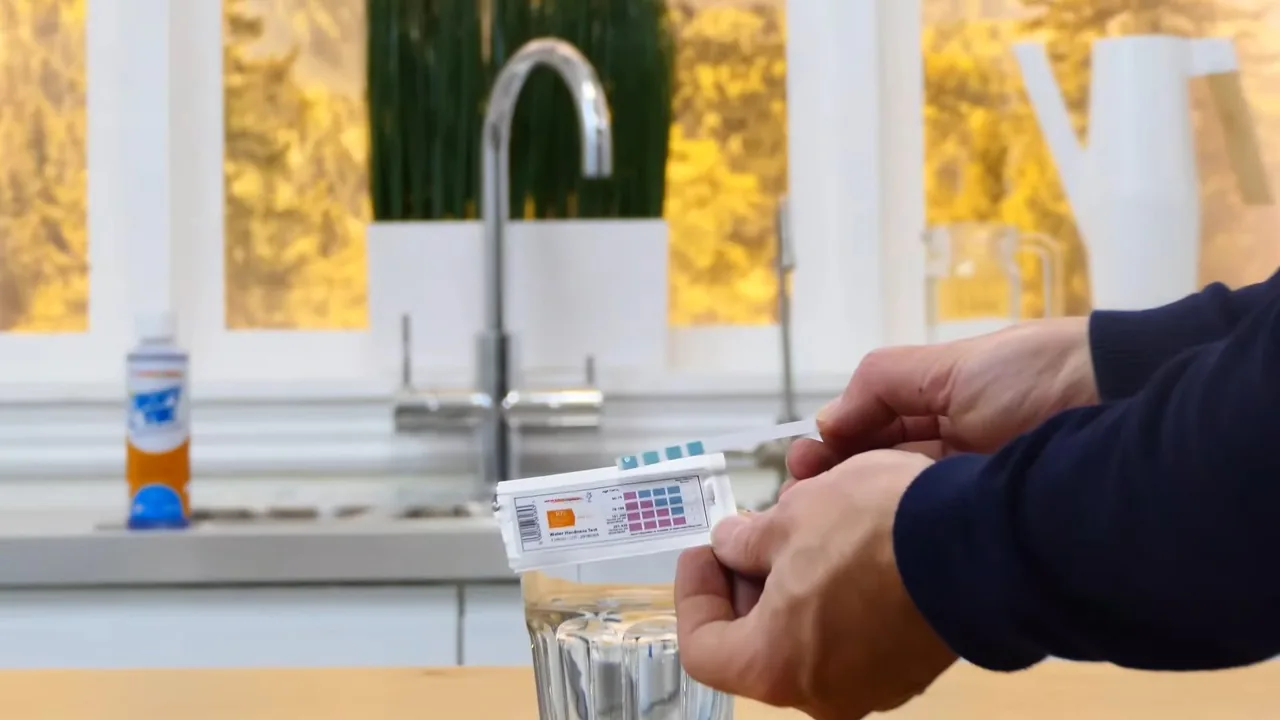
Ask how you will know the unit is working. A simple hardness test strip before and after the unit gives you a number you can keep and compare later.
Servicing an existing softener
If you already have one that no longer softens, the usual suspects are an empty brine tank, a salt bridge, a clogged injector or a control valve that is not cycling. Ask the plumber to test the water hardness before and after the unit, so you know whether it is working.
Commercial water treatment
Restaurants and shops often need larger units or filtration for equipment. Describe the equipment and its manufacturer's water requirements when you call.
Softener questions, answered plainly
How hard is Diamond Bar water?
It depends on the source. Walnut Valley Water District's report lists an average of 234 mg/L from the Weymouth plant and 97 mg/L from Miramar. The U.S. Geological Survey calls above 180 mg/L very hard and 61 to 120 mg/L moderately hard. The report does not say which blend serves which street.
Is a water softener the same as a water filter?
No. A softener removes the minerals that cause scale. A filter removes other things, such as chlorine taste or odor. White crust on fixtures points to hardness. A taste complaint points to a filter. Be clear about the problem before you buy either.
Can I put a salt-based softener anywhere in Diamond Bar?
Some California communities restrict softeners that discharge salty rinse water to the sewer, and state law lets local agencies do so. We did not find a rule for Diamond Bar, so ask the installer and the sewer agency before you buy.
Related water quality pages
Water Heater Installation
Planning treatment with a new tank.
Tankless Water Heaters
Why scale matters more on small heat exchangers.
Faucet and Sink Repair
Fixtures that scale has damaged.
Hard water in the house
Tell us what you see on fixtures and appliances. A plumber will help you work out whether a softener, a filter or neither is the answer.