
Garbage disposal repair · Diamond Bar, CA
Garbage Disposal Repair in Diamond Bar, CA: Safe Checks, Then Repair or Replace
A disposal that hums, jams or leaks usually has one of a few causes, and some can be checked in a minute. This page starts with the safe checks, then covers when repair stops making sense and what replacement involves.
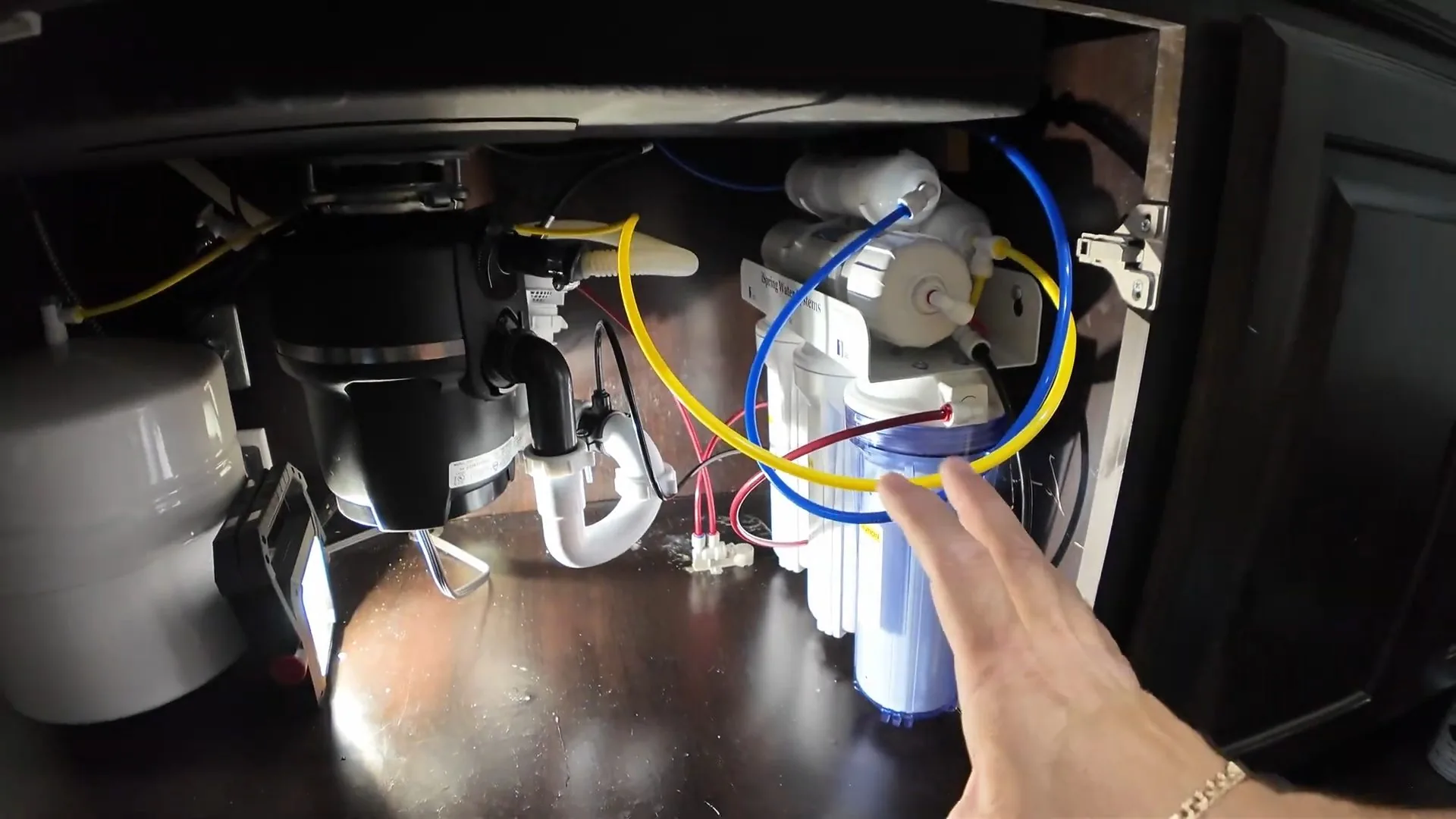
Power off and unplugged before you touch the disposal
A disposal has sharp parts and an electrical supply. Turn off the switch, and unplug the unit or switch off its breaker before anything else. Never put your hand in the opening, even when the switch is off.
- Hum but no spin usually means the blades are jammed.
- No sound at all usually means a tripped reset button or a dead outlet.
- Water under the sink may be a drain connection, a seal or the unit itself.
Use a wooden spoon handle or the manufacturer's wrench from above to clear a jam, with the power off. Press the red reset button on the bottom after the unit has cooled.
Where is the water coming from?
A leak under the sink can come from four places, and the repair differs for each. Dry the area, run water, and watch where the first drop forms.
| Where it leaks | Usual cause | Usual answer |
|---|---|---|
| Top, at the sink flange | Failed seal or loose mount | Reseat the flange |
| Side, at the drain pipe | Loose or worn connection | Tighten or replace the gasket |
| Dishwasher hose connection | Loose clamp | Tighten or replace the clamp |
| Bottom or body of the unit | Cracked housing or failed internal seal | Replace the disposal |
Disposal leaking or humming? Call and say which.
Call (833) 571-0120Fix the unit, or buy a new one?
A jam, a loose connection or a worn gasket is a repair. A leak from the body of the unit is almost always a replacement, because the housing cannot be fixed. Repeated jams and a motor that overheats also point toward replacing.
Ask the plumber for the age of the unit if it is on the data plate, what the failure is and what a replacement would involve. Compare a repair quote with a replacement quote on the same page.
How a disposal swap goes: disconnect, mount, reconnect
- The old unit is disconnected from power, the drain and the dishwasher hose.
- The mounting assembly is removed and the sink flange is cleaned.
- The new unit is mounted, the drain is reconnected and the dishwasher port is opened if one is used.
- Water and power are tested and leaks are checked.
Ask whether the quote includes a new power cord or cord kit, the mounting parts and the disposal of the old unit. Ask what horsepower is quoted and how it fits your household.
Clogs that look like a disposal problem
A sink that does not drain even with the disposal running often has a clog beyond the unit. If the other sink or the dishwasher backs up too, the blockage is in the drain line. See clearing a clogged kitchen drain for how that is handled, and tell the plumber what else is slow.
Photos and details to send before the first disposal visit
A few details let the plumber bring the right parts the first time. Photos of the data plate and the pipes under the sink are the most useful thing you can send.
- What the unit does: hums, clicks, stays silent or leaks.
- Where the first drop of water appears.
- Whether a dishwasher is connected to the unit.
- Whether the reset button has been tried.
If the cabinet floor is wet, say so. Damp wood under a sink needs drying, and the plumber can tell you how long the leak has likely been running.
Preventing jams: fibrous scraps, bones and cold water
Most disposal jams come from what goes down it. Fibrous scraps, bones and large amounts of starch are the usual culprits. Run cold water while the unit runs and for a short time after, so the waste is carried down the line and not left in the trap.
- Cut fibrous scraps small, or put them in the trash.
- Keep grease out of the sink, since it coats the drain downstream.
- Do not use chemical drain openers in a sink with a disposal.
- Do not run the unit with nothing in it for long periods.
Grease that coats a kitchen drain can build up well past the disposal. If the line keeps clogging, scouring a greasy drain line clears the wall and not only the clog.
Permits and the details
The City of Diamond Bar says plumbing permits are required for all plumbing work, including related fixtures and appliances. A simple swap may not need one. Ask the plumber, or call Building and Safety at (909) 839-7020.
Commercial kitchens
A restaurant disposal is a heavier unit and often shares a grease line. Mention the equipment and the line when you call, since commercial kitchens have separate drain issues.
Disposal questions homeowners ask
What should I do first when my disposal hums but will not spin?
Turn off the switch and unplug the unit or switch off its breaker. Never put a hand in the opening. Clear the jam with a wooden spoon handle or the manufacturer's wrench from above, then press the reset button on the bottom after the unit has cooled.
Can a leaking garbage disposal be repaired?
It depends on where it leaks. A leak at the sink flange or a drain connection is usually a seal, gasket or clamp. A leak from the body of the unit almost always means replacement, because the housing cannot be fixed. Dry the area and watch for the first drop.
Why does my sink still back up with the disposal running?
A clog beyond the unit is the usual cause, especially when the other sink or the dishwasher also backs up. That is a drain line problem, not a disposal problem. Tell the plumber what else is slow when you call.
Other kitchen and drain pages
Faucet and Sink Repair
Drips and leaks at the sink.
Drain Cleaning
Clearing the line behind the sink.
Water Damage Restoration
Drying a cabinet floor after a leak.
A disposal that has quit
Tell us what it does and where the water shows. A plumber will explain whether a repair will hold or the unit needs replacing.